
CNC tapping clutch: what it is and why it keeps you from breaking the tap
A tapping clutch is one of those accessories that go unnoticed until you break the third tap in a run. Its job is simple but key: slightly decouple the spindle rotation from the Z-axis feed when the CNC is not perfectly synchronized.
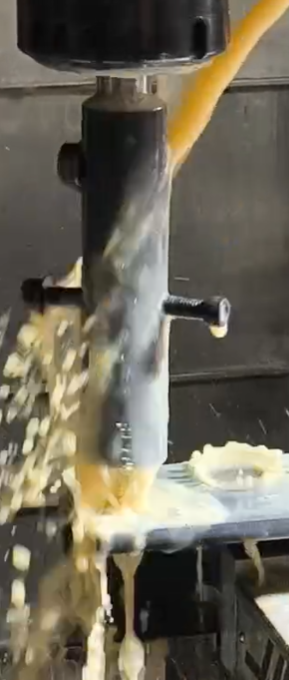
What is a tapping clutch?
A tapping clutch, also called a tap holder with clutch or compensated tapping head, is a device mounted between the tool holder and the tap. Its purpose is to allow a small relative slip between the machine spindle and the tap, so that the axial feed and rotation stay coordinated even with small calibration errors.
In practice, it works like a mechanical fuse: if the torque exceeds the set value, the clutch slips instead of transmitting all the force to the tap. This way the tap does not receive a sudden load that would break it.
Why do taps break when tapping in CNC?
Tapping with a die demands that the feed per revolution exactly matches the thread pitch. If you program a feed of 1.5 mm/rev for an M10 × 1.5 tap, the tap must advance 1.5 mm per exact revolution.
When the CNC, spindle or Z-axis servo are not perfectly calibrated, two dangerous situations arise:
- Compression: the tap advances more than it rotates. The axial force pushes it down and ends up cracking or breaking it.
- Tension: the tap rotates more than it advances. The torsional stress and upward pull exceed the shank's strength.
These mismatches occur easily if there is play in the ball screw, delays in the drive response, abrupt accelerations when entering or leaving the G84/G74 cycle, or incorrect feed programming.
How does the tapping clutch work?
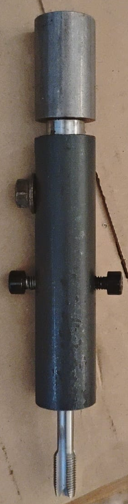
The device consists of three main parts:
- Outer body: couples to the tool holder or the machine spindle.
- Inner shaft: holds the tap, usually by means of a collet or a clamping square.
- Clutch system: springs, balls or discs that transmit the rotational torque up to an adjustable limit.
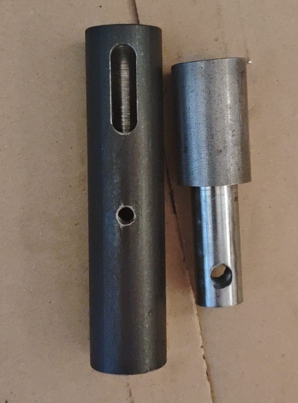
When the mismatch between rotation and feed causes an overload, the clutch performs a controlled slip that absorbs the excess torque. Once synchronisation is recovered, it re-engages and the cycle continues. The tap does not suffer the stress spike that would have broken it.
Types of tapping clutch
Not all clutches offer the same level of protection:
- Axial and torsional compensated clutch: allows both rotational slip and a small longitudinal movement of the tap. It is the safest option for CNC with significant mismatches or non-optimal calibrations.
- Torque-only clutch: slips on excess torque but does not compensate axial movements. It is cheaper, though less protective.
For workshops that tap regularly in CNC and want no surprises, we recommend a model with axial and torsional compensation.
Advantages of using a tapping clutch
- Prevents tap breakage from desynchronisation between rotation and feed.
- Protects the part and avoids costly rework from taps broken inside the hole.
- Reduces downtime and unnecessary tool changes.
- Compensates play and small errors in mechanical or electronic calibration.
- It is adjustable: the slip torque can be set according to tap diameter and material.
When is it essential?
The tapping clutch becomes essential in situations such as:
- CNC machines without rigid tapping, or with poorly configured rigid tapping.
- Spindles with play or equipment with many working hours.
- Tapping of large diameter or in hard materials where torque is high.
- Long runs where a breakage means losing parts and time.
Tapping clutch at MASA Mecanizados
At MASA Mecanizados, in Subirats, Barcelona, we work with CNC machining and conventional turning for all kinds of technical parts. We know how costly it is to break a tap inside an already machined part, which is why we rely on tools and accessories that protect both the process and the final result.
If you break taps frequently or want to improve the reliability of your threads, write to us and we will advise you with no obligation.
Want to avoid tap breakage in your threads?
At MASA Mecanizados we help you choose the best tapping system for your CNC and your production in Barcelona and the Penedès.
Request advice